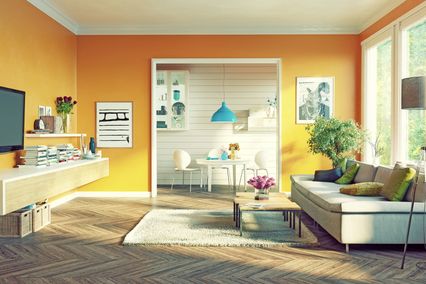

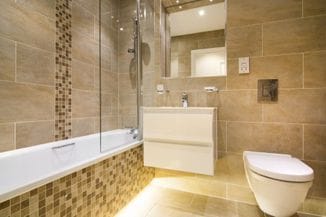


A huge number of shades, countless ways to combine them and a great number of producers at the colour market for interior design do not make this task easier at all. And when we choose the colour scheme to create the desired ambience, there is one more important element that we should pay attention to - level of paint sheen or gloss. Level of paint sheen has a great effect on the perception of the colour itself and also on its applicability. Not only does the sheen level of paint determine the visual effect of the walls, but it also makes it more resistant to external elements. Sheen increases the paint resistance to mechanical damage and moisture. Greater sheen level makes the colour lighter and of rich intensity as well, compared to the shades with less or no sheen. But you should be careful when selecting it because high-gloss paints make all imperfections and defects more visible on any surface.
All paints are usually produced in 4 basic sheens, and what level to choose depends on the function of the space which is going to be decorated.
4 levels of sheen in rooms of different use
Matte
paints - they
have the lowest level of sheen or no sheen at all depending on the
producer. They are ideal for covering smaller imperfections on the
walls, but they are less durable and harder for maintenance than the
paints with higher level of gloss. Also, matte paints make the
painting errors less visible. They are extremely pleasant and look
classy in space and are recommended for ceilings and rooms where
small number of people stays. Matte paints are a good choice for
bedrooms, living rooms and dining rooms.
Semi-gloss
(semi-matte) paints - these paints reflect an elegant or soft sheen of lower intensity.
They are more durable than matte paints and are easier to maintain.
They are recommended for much frequented rooms, those exposed to
moisture and those which require more frequent cleaning. Semi-gloss
paints have proved to be an excellent choice for kitchens, bathrooms,
children’s rooms, hallways and doors of wardrobes, shoe cabinets or
kitchen furniture.
Glossy
paints - they
have a highly reflective sheen, are very durable and stable, easy to
clean and maintain. Gloss paints exaggerate imperfections on
surfaces. They are used for much frequented rooms and they are a good
choice for rooms that need frequent cleaning - children’s rooms,
hallways, kitchens, offices and other working areas, catering
facilities, doors…
High-gloss
paints (satin) - these paints produce extremely shiny, polished look like glass. They
are very durable, resistant to damage and the easiest to maintain.
They reflect the most of light in the space, which means that all
imperfections on surfaces are easily noticed. One disadvantage of
high-gloss paints is that the next coat of paint is harder to apply.
High-gloss paints are recommended for highly frequented rooms, rooms
where pets live, children’s rooms, doors, hallways…
In
industry the standard of gloss percentage in paints is not precisely
defined, so that it often happens that what one producer describes as
satin paint, others describe as semi-gloss. Apart from this, you will
come across names such as velvet or eggshell for paints with higher
sheen than matte paints and pearl for high-gloss paints.
And finally, you should have in mind that in practice the same colour with different gloss finish has a completely different look on the walls. Various effects can also be achieved if we apply it to walls of different texture.